
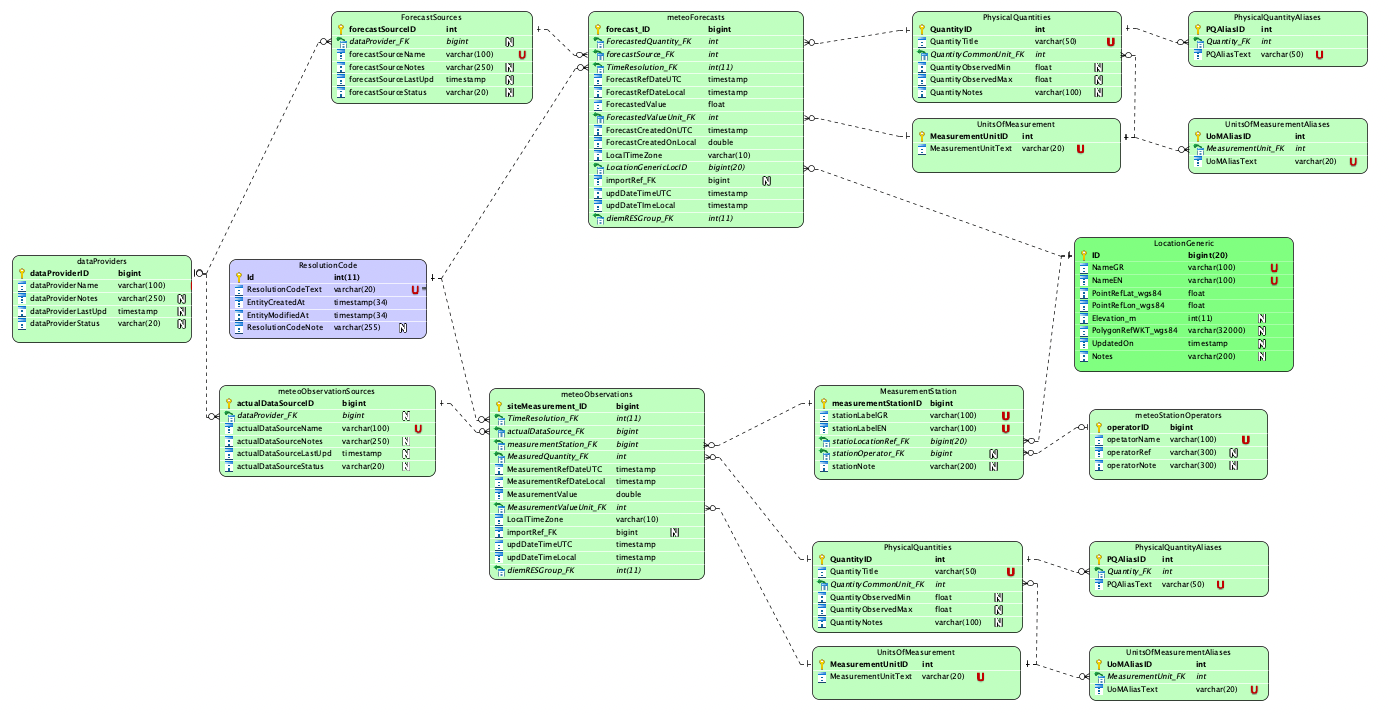
1. Fundamentals of databases: data models, databases management systems, history
2. The entity-relationship model, the relational data model
3. Relational Algebra
4. The SQL query language
5. Client-server architecture for data management
6. Joins, views and mathematical functions in SQL
7. Typical DBMS systems: Libre Office Base, MySQL
8. Database design and automation tools
9. Introduction to spatial data types ang the OGC Simple Features standard
10. Semester project
- Teacher: Βασίλειος Βεσκούκης
- Teacher: Νικόλαος Δουλάμης
Τομέας: Τοπογραφίας
Κατεύθυνση: Ολες
ECTS : 5
Language : el
Learning Outcomes : Upon successful completion of the course, the student will be able to: • understand techniques related to the organization and database systems • read and create conceptual and physical data models • use database management systems to build a database • use SQL to interact with a database • use tools to design and manage databases in a client-server environment • understand how database techniques can be correlated with issues for Rural & Surveying Engineers and Geoinformatics Engineers. Upon completion of the course, the student will have sufficient knowledge of all fundamental concepts of the cognitive subject of databases that allow understanding the principles and utilizing the tools of this scientific field in data organization and management subjects, which are critical in geoinformatics. They will possess skills in creating and managing databases that will help them solve difficult topographic and geoinformatics problems. They will also be able to manage complex technical or professional activities and make decisions during implementation.