
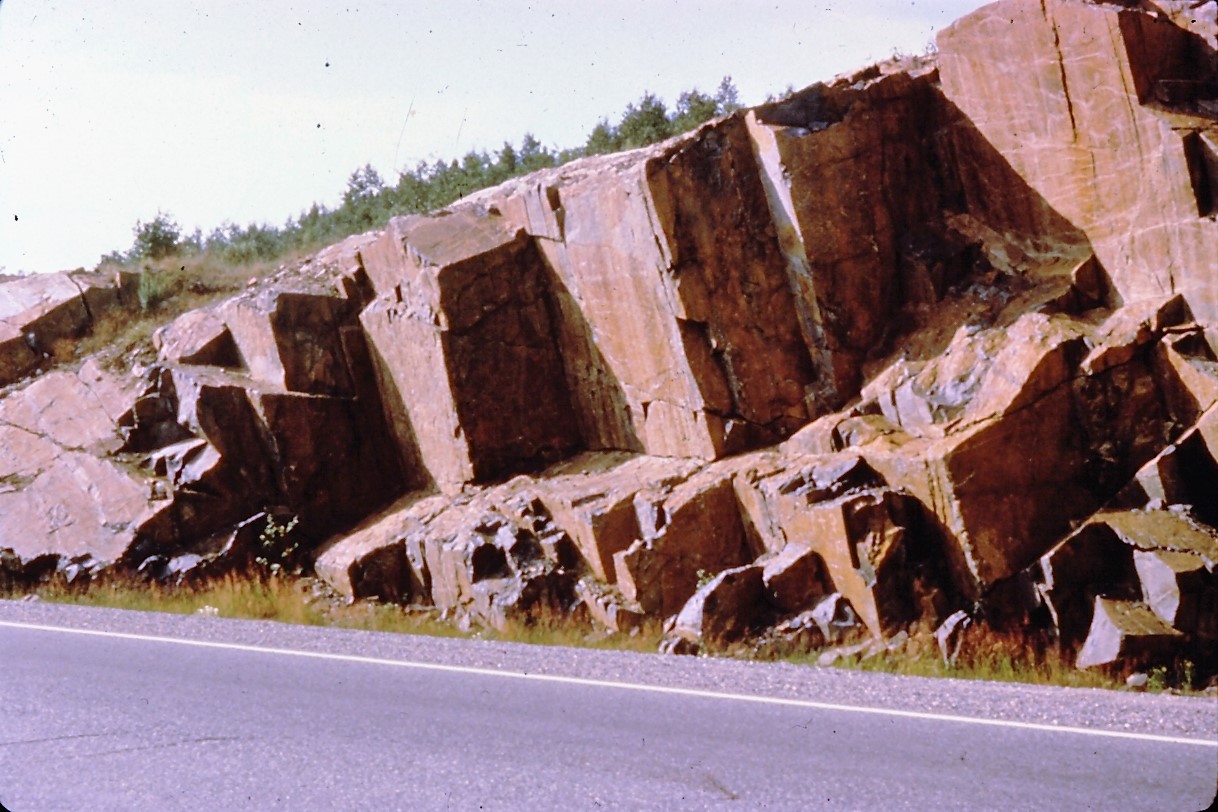
▪ Introduction. Definitions. The rock as a continuous and discontinuous
medium. Rock mass. Rock mechanics and geotechnical engineering.
Applications in civil and mining works.
▪ Basic engineering mechanics. Rock stress. Natural stress field. Rock
deformation. Stress – strain relations.
▪ Physical properties of rock and laboratory determination.
▪ Uniaxial compression of intact rock: uniaxial compression test. Indirect
assessment of uniaxial compressive strength (point load test, Schmidt hammer
rebound index, other indirect tests).
▪ Triaxial compressive strength: Conventional triaxial compression test. True
triaxial test. Mechanical behaviour of rock in triaxial compression. Failure
criteria.
▪ Tensile strength of rock. Direct and indirect tests.
▪ Dynamic rock behavior.
49
▪ Shear strength of rock discontinuities: Friction resistance, roughness,
persistence effect. Laboratory and in situ shear test. Empirical criteria of
discontinuities’ shear strength. Shear strength of filled discontinuities. Shear
strength of rock plane with non-persistent discontinuities.
▪ Rock mass mechanical behavior: Rock mass structure. Discontinuities. Rock
mass classifications – empirical determination of mechanical rock mass
properties. Failure criteria. In situ testing.
▪ Rock slopes stability analysis: Failure mechanisms. Plane failure: factor of
safety (F.S.) computation, effect of groundwater, effect of discontinuities’
roughness. Tensile cracks. Effect of seismic loading. Stabilization –
reinforcement against plane failure. Wedge failure: kinematic conditions, FS
computation. Sliding on a curved surface: Hoek – Bray diagrams, analytical
determination of FS – methods of slices (Fellenius, Bishop, Janbu). Rock slope
stability according to Eurocode 7. Rock toppling.
▪ Basic principles of stability analysis of underground excavations.
▪ The above modules are supplemented by practice exercises, presentation and
execution of laboratory tests and use of specialized geotechnical software.
- Teacher: Ιωάννης Ζευγώλης
- Teacher: Παύλος Νομικός
ECTS : 6
Language : el
Learning Outcomes : Upon successful completion of the course, the student will be able to: • Understand the principles and methods of rock mechanics and their application in the geotechnical design of mining and technical projects. • Analyze and understand the stress state and mechanical behavior of intact rock, discontinuities, and rock mass, under imposed loads and for various applications. • Select the appropriate experimental setups and perform laboratory tests for strength and deformability of rock and its discontinuities. • Technically characterize the rock mass and calculate its strength and deformability parameters using empirical methods. • Recognize and determine the appropriate data and use the appropriate methods for performing geotechnical investigations in rock slope stability projects. • Appropriately adjust and modify slope design based on geotechnical data and project requirements, as well as synthesize data in order to select the technically and economically optimal solutions.